Product Engineers will replace Software Engineers
Not overnight, but I see it happening

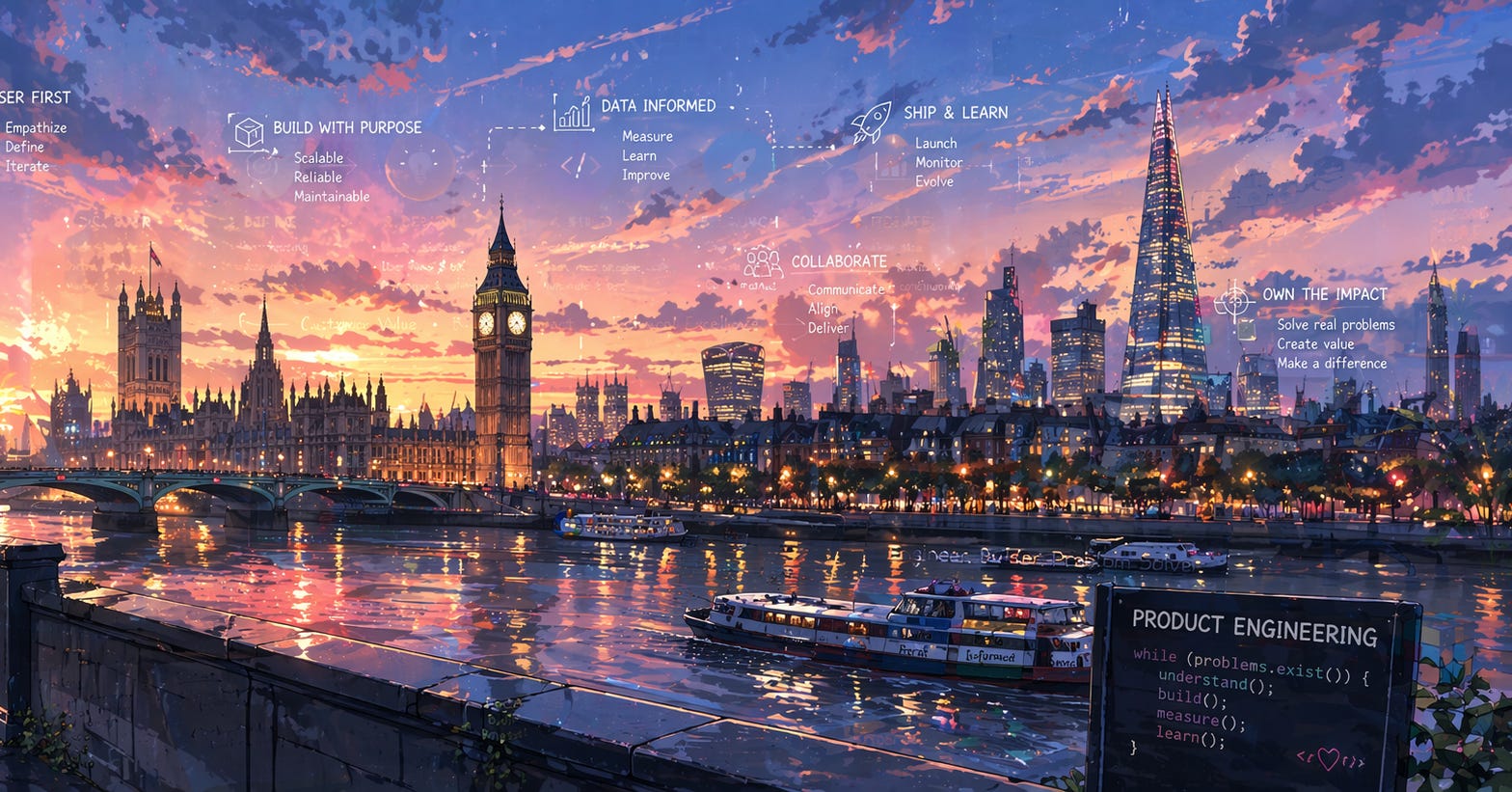
Everyone is talking about AI tools. Better autocomplete, faster workflows, and agents that can generate entire features. Tools like Claude Code and OpenAI Codex come up in almost every conversation. Most people frame this as a productivity upgrade, as if engineers will simply do the same work but faster.
That’s true, but it misses the bigger point. The real shift is not speed. It’s what actually counts as valuable work.
The unit of value has changed
For a long time, software engineering value was tied closely to implementation. How well you could translate requirements into working code. How clean your logic was, how well you handled edge cases, how efficiently you built things.
That made sense when execution was expensive. Writing software took time, coordination, and effort, so the ability to implement reliably was a core differentiator.
Now execution is getting cheaper.
When you can generate large parts of a system quickly, the bottleneck moves away from typing and into thinking. Suddenly, the hard part is not “can you build this” but “should this exist, and if so, what should it look like?”
That is not just engineering. That is product.
I’m already seeing this play out
At my current company, my role is literally Product Engineer. I was the first person to hold that title there, which already says something about where things are heading.
But what’s more interesting is that even the people with the title “Software Engineer” don’t really operate like the traditional definition anymore.
They don’t just implement tickets.
They question them.
They suggest better approaches.
They push back when something doesn’t make sense.
They think about the user, not just the task in front of them.
In practice, most of them are already product engineers. The title just hasn’t caught up yet.
Vibecoding made this obvious
The whole vibecoding wave exposed this shift very clearly. When you can spin up features quickly, experiment freely, and iterate without much friction, you realise that the real challenge is not producing code. It’s making decisions.
You have to decide what to build, how it should behave, what tradeoffs to make, and what actually matters for the user. The AI can give you output, but it cannot give you judgment. It won’t tell you if your system design is flawed or if your UX is confusing in subtle ways.
That layer of thinking becomes the bottleneck.
And that layer is exactly what product engineers operate in.
The traditional role is too narrow
The traditional software engineer role is relatively scoped. You’re given a problem, often in the form of a ticket or a spec, and your job is to implement it correctly. You might influence parts of the design, but you are largely operating within boundaries that someone else defined.
That model worked when implementation itself was the hardest part.
But if tools can handle a significant portion of that implementation, then a role that is purely focused on that layer becomes less valuable over time. Not useless, but narrower in impact.
The people who stand out are the ones who don’t just execute tasks, but shape them.
Product engineers are just end-to-end builders
A product engineer isn’t a completely different species. It’s simply someone who operates across the full loop.
They understand the problem, define what should be built, design how it should work, implement it, and then iterate based on real feedback. They don’t wait for perfectly defined tickets because they can create clarity themselves.
They think in terms of outcomes, not just outputs.
When you combine that mindset with tools like Claude Code and OpenAI Codex, the leverage becomes very obvious. You’re no longer limited by how fast you can write code. You’re limited by how clearly you can think and how well you can steer.
Speed changes what matters
When the gap between idea and execution shrinks, the bottleneck becomes clarity. If you know what you’re doing, you can move incredibly fast. If you don’t, you just generate more confusion at a higher speed.
That’s why the same tools feel empowering to some people and overwhelming to others.
It’s not about access. Everyone has access.
It’s about direction.
Why this matters right now
A lot of people are still optimising for the old version of the role. Grinding technical interviews, focusing heavily on implementation in isolation, and assuming that being “good at coding” is enough.
But the bar is shifting.
Now it’s about whether you can think in systems, make sensible product decisions, and ship something that actually works in the real world. Companies don’t just need code. They need outcomes that make sense for users and for the business.
That requires a broader skillset.
What doesn’t disappear
This doesn’t mean deep engineering disappears. There will always be a need for people working on infrastructure, performance-critical systems, and complex low-level problems.
But that’s not most roles.
Most roles sit at the intersection of product and implementation. And that’s exactly where this shift is happening fastest.
Where I’ve landed
I don’t really see myself as just a software engineer anymore.
I think of myself as someone who builds products end-to-end. Sometimes that means writing code, sometimes it means redesigning a flow, sometimes it’s jumping on a call with users and figuring out where things are breaking.
The tools just reduce friction between all of those layers.
And once you get used to that, it’s very hard to go back to a world where your role is just “implement the ticket”.
Software engineering isn’t disappearing because coding is no longer useful.
It’s evolving because coding alone is no longer enough.
The default is shifting towards people who can take an idea, shape it, build it, and make it work in the real world.
Call them Product Engineers.
That’s where things are heading.